
By Vicki Rackner, MD | Engaging Doctors
“What would you like your money to accomplish?”
It’s a useful question. But a story can help a physician think beyond account balances and consider the impact they want to make.
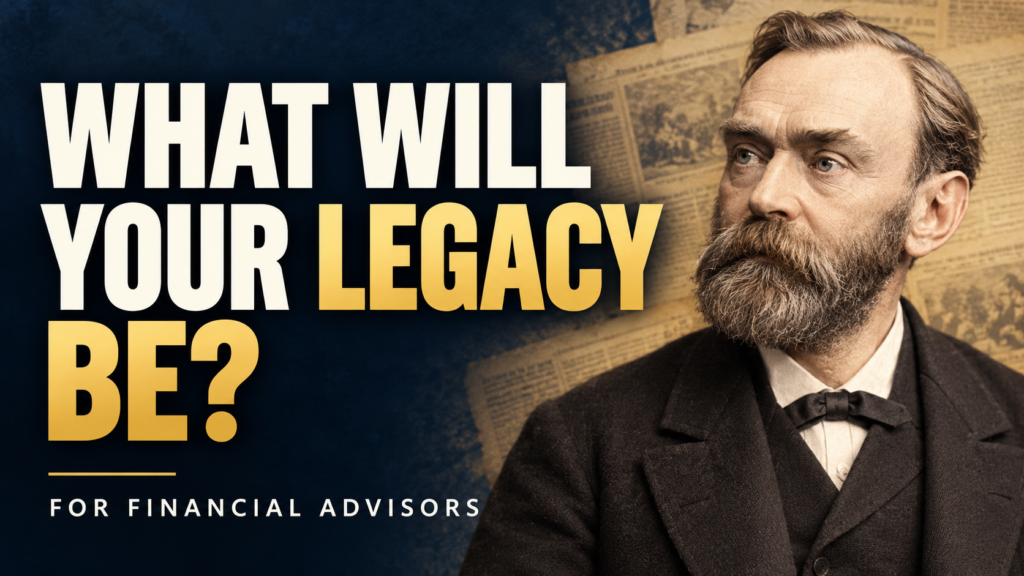
Alfred Nobel’s story offers an opening.
According to a familiar account, a newspaper mistakenly published Nobel’s obituary after his brother died, describing him as a “merchant of death.” The story suggests that reading this account prompted Nobel to reconsider how he would be remembered.
The obituary story remains unverified, and we should not present it as established history. What is documented is that Nobel’s 1895 will directed much of his fortune toward the prizes that bear his name.
For advisors, the story can introduce a thoughtful conversation about aligning financial choices with a physician’s values.
Language to open the conversation
You might say:
“There’s a familiar story about Alfred Nobel reading his own obituary and being troubled by how he would be remembered. Historians haven’t verified that account, but we do know that his will established the Nobel Prizes.
“It raises an interesting question: Are we building the legacy we want?
“Would you be open to spending a few minutes talking about yours?”
Then pause. Give the physician room to decide whether—and how deeply—to engage.
Questions that help physicians explore their legacy
Start with one question and follow the answer, rather than working through a checklist.
“How would you like to be remembered?”
If the response centers on professional accomplishments, gently broaden the conversation:
“What would you hope your family, patients, or the physicians you’ve mentored would say about you?”
“Are there causes you want to support today, in the years ahead, or as part of the legacy you leave?”
Explore the meaning behind the cause:
“What draws you to that work? Is there a personal experience behind your interest?”
“If you’re comfortable imagining it, what would you like your obituary to say?”
Some people find this question clarifying; others find it uncomfortable. An alternative is:
“What would you hope someone would say when celebrating your life?”
“Do your current choices support that legacy?”
Keep your tone curious. This question should invite reflection, not imply that the physician has fallen short.
You could follow with:
“Where do you already see that alignment? Is there anything you would like to make more room for?”
Turn reflection into one concrete action
Suppose a physician says, “I want to help students who don’t have the opportunities I had.”
Before discussing financial arrangements, ask what helping would look like. The physician might envision mentoring, supporting an existing scholarship, or eventually funding one.
Then ask:
“What is one step you would like to take now?”
Agree on a manageable action and a time to revisit it. Once the goal is clear, explore the financial implications and involve appropriate tax, charitable-planning, or estate-planning professionals where needed.
Legacy includes what physicians give, but also how they live: the relationships they nurture, the people they teach, and the time they devote to what matters.
When you help a doctor connect those priorities with concrete choices, you make financial planning more personal—and more useful.