
If You Work With Physicians Long Enough
If you work with physicians long enough, you will eventually encounter physician debt anxiety.
Sometimes it’s student loans.
Other times, it’s a mortgage.
In many cases, it’s business or real estate leverage.
Here’s the key point:
Debt anxiety does not mean something is wrong.
Rather, it is a normal response to pressure and risk.
What matters most, therefore, is how the physician responds to that anxiety.
Anxiety About Debt Is Common and Understandable
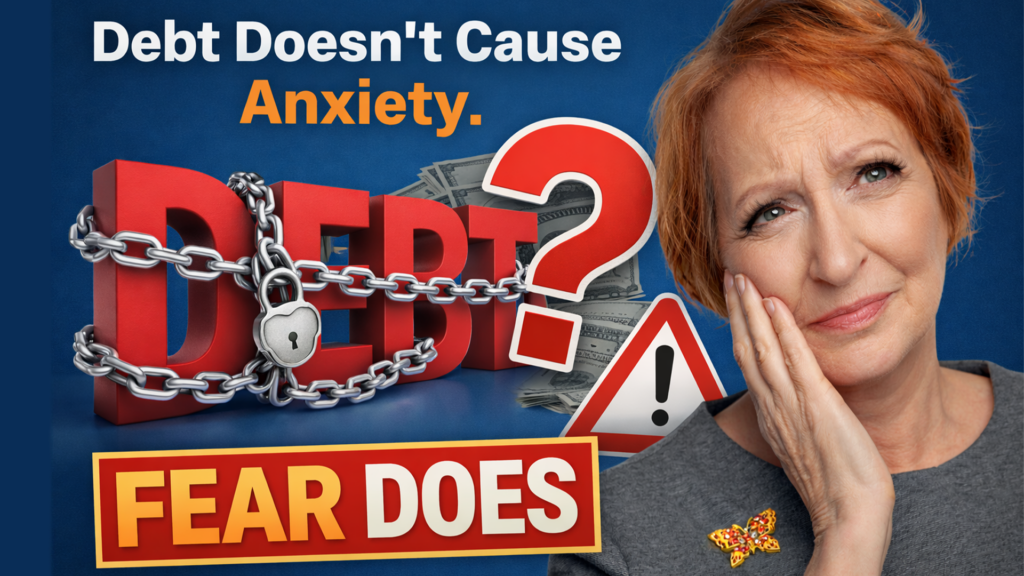
Debt itself does not cause anxiety. Instead, anxiety comes from the perceived threat of being unable to repay it.
Because of this, the nervous system may interpret debt as:
-
Exposure
-
Loss of control
-
Existential risk
When a physician fears “losing everything,” the body shifts into survival mode. As a result, logic and probability become harder to access.
This is precisely why simply “running the numbers” often fails at least initially.
The Anxiety Is Not About the Debt
Debt itself does not cause anxiety.
Anxiety comes from the perceived threat of being unable to repay it.
To the nervous system, debt can feel like:
-
Exposure
-
Loss of control
-
Existential risk
When a physician fears “losing everything,” the nervous system shifts into survival mode.
At that point, logic and probability are hard to access.
This is why simply “running the numbers” often fails at least at first.
Anxiety Is Not Intuition
Many physicians mistake anxiety for intuition.
They are not the same.
Anxiety is loud, urgent, repetitive, and catastrophic.
Intuition is calm, grounded, and spacious.
Feeling scared does not automatically mean something is unsafe, especially when the numbers suggest otherwise.
For example, low-interest student loans paired with a long earning horizon often make early investing mathematically sound.
Yet anxiety may still insist:
“Pay everything off first so I can feel safe.”
Understanding this distinction prevents fear-based decisions from masquerading as wisdom.
How Anxiety Quietly Sabotages Wealth-Building
Unchecked anxiety often leads physicians to delay:
-
Investing
-
Practice improvements
-
Entrepreneurial opportunities
-
Coaching or education that could accelerate growth
Statements like:
“I’ll invest once my loans are gone.”
“I need zero debt first.”
These are often driven more by emotional safety than financial strategy.
Anxiety collapses time.
Wealth is built over decades.
Good Debt vs Bad Debt: A Tool, Not a Moral Failing
Debt is not a moral issue. It is a tool.
Bad debt: high-interest consumer debt that drains future options.
Strategic debt: education, real estate, or business leverage used intentionally to build assets.
The real question is not:
“Do I have debt?”
It is:
“Is this debt serving the life I’m trying to build?”
Engage the Planning Brain Without Dismissing Anxiety
Anxiety is not always wrong. Sometimes it’s an early warning signal.
If assumptions are shaky or reserves are thin, anxiety may be prompting caution.
This is where advisors add enormous value:
-
Run the numbers
-
Stress-test scenarios
-
Model best- and worst-case outcomes
-
Add perspective and time horizon.
Calming the nervous system does not mean ignoring risk.
It means creating enough safety to evaluate risk accurately.
A useful frame:
We want anxiety in the room but not in the driver’s seat.
Risk Is Real, and Fear Can Coexist With Leadership
All investing involves risk. Money can be lost.
At a recent physician investor meeting, one doctor said:
“I’m millions of dollars in debt, and my goal is to be tens of millions in debt. That means I’m building assets.”
That mindset only works when paired with:
-
Rigorous planning
-
Cash flow discipline
-
Adequate reserves
-
Emotional tolerance for leverage
This isn’t bravado.
It’s math plus self-leadership.
A Compassionate, Contrarian View of Anxiety
Many physicians want anxiety gone.
But anxiety is not the enemy. It is a protective system trying sometimes clumsily to keep them safe.
A helpful reframe:
“Thank you for trying to protect me. I’ve got this.”
Medication may be helpful for some people. That deserves respect.
But medication alone does not teach someone how to lead themselves through uncertainty.
Be Willing to Feel Anxiety It Will Pass
Anxiety rises, peaks, and falls if allowed.
Resisting it is like holding a beach ball underwater it eventually pops up with more force.
The initial fear is the trigger.
The struggle with the fear causes the damage.
Feeling anxiety is uncomfortable but not dangerous.
Fighting it is exhausting.
The Advisor’s Real Value: Nervous-System Leadership
Doctors don’t just need financial models.
They need a calm presence when stakes feel high.
Financial confidence is not the absence of anxiety.
It’s the ability to stay present, think clearly, and make values-aligned decisions while anxiety is present.
When advisors can hold space for both emotion and math, they become indispensable not just as planners, but as trusted partners.