

They say money makes the world go round.
During a recent visit to the Detroit Institute of Arts, I discovered something that made me appreciate how deeply the exchange of value is woven into human history.
Our need to keep track of economic activity helped give rise to writing itself.
Some of the earliest written records documented goods, workers’ rations, taxes, and deliveries. People needed a reliable way to record what had been supplied, distributed, or owed.
That practical need helped drive one of humanity’s most consequential inventions.
As a financial advisor, you work with the modern descendants of those records every day. The connection offers a useful way to think about your work with physicians: behind the numbers are people creating value, meeting obligations, and deciding what their resources should make possible.
Writing began with receipts
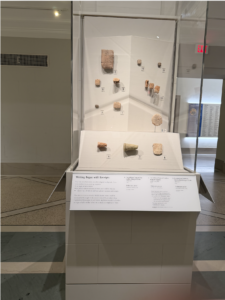
Last week, I had the honor of being invited to sign copies of The 9 Money Mistakes Doctors Make for physicians at the Detroit Institute of Arts.
While exploring the galleries, I stopped at an exhibit titled “Writing Began with Receipts.”
I had never fully considered that connection.
We associate writing with stories, ideas, and the preservation of knowledge. Yet this exhibit described the practical accounting purposes of some of the earliest cuneiform texts in Mesopotamia.
People used writing to organize labor forces, provide workers with rations, and keep track of tribute and taxes given to palaces and temples.
Who had delivered the goods? What had workers received? What resources were available?
Writing allowed people to preserve that information beyond the memories of those involved.
The significance is easy to overlook. We are so accustomed to bank statements, receipts, and electronic records that recording a transaction seems ordinary. But developing a durable way to represent economic information was an extraordinary innovation.
This is a story about early writing in Mesopotamia, rather than an explanation for every writing system that developed around the world. Within that history, the connection is striking: accounting was central to some of humanity’s earliest writing.
Our need to keep track of value helped bring the written word into the world.
A shipment of reeds preserved for four thousand years
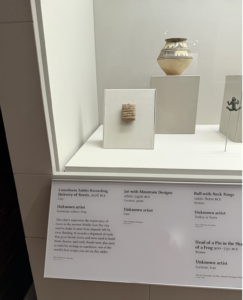
Nearby, a small clay tablet recorded the delivery of reeds in 2028 BCE.
The museum label explained that reeds were used to build boats, houses, and roofs. They also served as tools for writing in cuneiform.
Someone supplied materials that people needed. Someone recorded their delivery. More than 4,000 years later, that record survives.
Naturally, my physician brain went straight to documentation.
To my physician colleagues: apparently, documentation requirements have been with us for millennia.
At least we don’t have to chart on clay tablets.
But the tablet’s larger lesson stayed with me.
The reeds had practical value. Recording their delivery helped people account for resources they could use. Writing made the information durable and available beyond the moment of the transaction.
Today, we can move money electronically in seconds and retrieve years of financial activity on a screen.
We have become extraordinarily good at recording transactions.
Understanding what those transactions mean for the people making them still requires a conversation.
Writing and money address related human needs
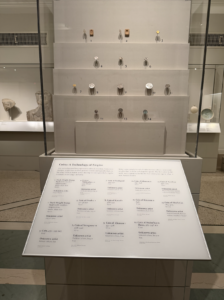
The museum’s coin exhibit added another dimension.
Coins have been around for roughly 2,700 years. The earliest examples of the western coinage tradition appeared in what is now Turkey during the seventh century BCE.
Money existed before coins. In ancient Mesopotamia, barley and silver could serve as means of payment and measures of value.
These developments did not follow one simple, universal sequence. Still, the exhibits revealed related human needs: producing things people could use, distributing resources, making payments, and keeping track of obligations.
Writing helped preserve economic information. Money provided ways to measure and exchange value.
For a financial advisor, this history offers a reminder of what lies beneath the records you review.
A compensation deposit reflects work performed within an economic system. A payment meets an obligation or purchases something. A savings contribution preserves resources for possible future use.
The figures matter because of what they represent in someone’s life.
Imagine receiving your compensation in chickens
When cash has been scarce, people have sometimes paid with goods or services.
During the Great Depression, some physicians accepted food from patients who could not pay in dollars. An oral history preserved by the National Park Service recalls payments of chicken, butter, and eggs.
Imagine a doctor finishing a day of house calls and arriving home with a chicken.
It may be a perfectly good chicken. But the mortgage payment is due, and the lender has limited enthusiasm for poultry.
The physician now needs someone who wants the chicken and can provide something the lender will accept.
Money makes that exchange more flexible. The physician can use compensation to purchase something entirely different from someone who was never a patient.
The work can help provide housing, education, care for a family member, or support for a community.
A portion can also be set aside for a time when the physician wants or needs to earn less.
The value created in one setting can support purposes far beyond it.
Cashless does not mean moneyless
The exhibits also made me think about predictions of a “moneyless” future.
When people mean replacing coins and paper bills with electronic balances, they are describing a cashless system.
We are still assigning prices, recording obligations, and exchanging purchasing power.
The records look different from clay tablets, but we are still keeping accounts.
And faster transactions do not resolve the human decisions behind them. A phone can make a payment almost effortless. It cannot decide whether that purchase supports the life its owner wants.
That is where your conversations with clients become essential.
Your physician clients create value beyond their compensation
As a surgeon, I did work whose significance could never be fully captured by a payment.
Helping a patient return to a life they love has meaning that extends beyond a fee.
At the same time, physicians need compensation to meet their own needs and obligations. Meaningful work does not eliminate the cost of housing, raising children, or preparing for the future.
A physician can love practicing medicine and want fewer overnight calls. They can appreciate their income and worry about how long they can sustain the schedule required to earn it.
You will understand the client more clearly when you allow those experiences into the financial conversation.
Their income tells you something about their resources.
Their account balances tell you something about what they have accumulated.
You still need to discover what they want those resources to accomplish.
Move from recording value to understanding its purpose
Consider a hypothetical physician who says, “I want to cut back.”
You could begin calculating retirement requirements. First, clarify what the physician means.
Does cutting back mean one fewer clinical day each month? Giving up extra weekend shifts? Reducing call? Leaving clinical practice entirely?
Suppose the physician wants fewer weekend shifts because they keep missing their daughter’s soccer games.
Now you have a recognizable change to investigate.
You can examine what those shifts contribute to household income, which commitments depend on that income, and what adjustments might be possible.
The analysis could reveal that the change requires preparation. It could also show that a smaller change is available sooner than the physician expected.
Either way, the financial work has a purpose the client helped define.
When you request compensation statements or spending information, explain the connection: “We’re gathering this so we can assess what it would take to give you those weekends back.”
You are using the records to help the physician evaluate a choice that matters.
Ask what the money is meant to do
You do not need to deliver a history lesson in every client meeting. You can carry the museum’s insight into the questions you ask.
Try one of these:
- “What would you like your money to make possible that it isn’t making possible today?”
- “What do you want to preserve about your current life?”
- “If you had more choice about your work, what would you change?”
- “Who or what would you like to support more?”
- “How would you know that your financial plan was improving your life?”
Then follow the answer.
If the physician wants security, ask what greater security would allow them to do. If they want to help their children, explore what kind of help they mean.
Avoid assuming that every physician wants to work less. Some want to expand a practice, teach, or contribute more time to a particular patient population.
Discover the purpose before deciding what the resources should support.
Give the records a direction
A meaningful conversation becomes more useful when it leads to a manageable action.
Agree on what information is needed, who will provide it, and when the next step will happen. Keep the request connected to the decision you are helping the physician evaluate.
If the information does not arrive, ask what got in the way. The request may have been unclear, the records difficult to locate, or the decision more complicated than it first appeared.
At the next meeting, return to the desired change as well as the outstanding task.
The numbers deserve careful attention. So does the person whose life they affect.
The human purpose behind the account
I went to the Detroit Institute of Arts to sign books. I left thinking about a connection I had previously overlooked.
The need to record economic activity helped give rise to writing. Thousands of years later, we are still developing ways to keep track of what we produce, receive, and owe.
For advisors, that history is a reminder of the human purposes behind financial records.
You help physicians understand their resources and the choices those resources can support. Your expertise helps them assess what is possible and what it will require.
Some of the earliest writers recorded deliveries of goods people needed.
Today, your work can help a physician connect the value of their care with a future they want to build.
Money is a tool. Records help us keep track of it.
What does your physician client want that tool to help them do?
Historical sources
Museum exhibit labels
Detroit Institute of Arts. Writing Began with Receipts; Cuneiform Tablet Recording Delivery of Reeds, 2028 BCE; Coins: A Technology of Empire. Photographs supplied by Dr. Rackner.
Early writing and economic records
https://www.metmuseum.org/art/collection/search/327385
Early coinage
https://www.britishmuseum.org/sites/default/files/2021-05/Money_Gallery_LPG_2020_Room_68.pdf
Money before coins
https://www.jstor.org/stable/3632646
Depression era payments in food
https://home.nps.gov/articles/000/a-layle-petey-childers-oral-history-interview.htm